The short answer
HealthyChildren.org, the parent-facing site from the American Academy of Pediatrics, says unborn babies start hearing sounds inside the body around 18 weeks of pregnancy. Around 27 to 29 weeks, they may hear some outside sounds too, including a parent's voice. By full term, hearing is much more developed.
For parents, this is a useful signal, not a pressure campaign. Reading or speaking to the baby can be a warm way to slow down, include a partner, and make the waiting period feel more connected. It should never become another chore or a source of guilt.
What familiar voice can mean
Older newborn studies reported that babies showed listening preferences for familiar maternal voice patterns after birth. Other research has explored whether repeated speech before birth can influence newborn listening preferences. These findings are interesting because they point toward familiarity, rhythm, and connection.
The safe product lesson is modest: a familiar voice story may feel more personal than generic background music. It is a keepsake and a companionship ritual, not a treatment and not a way to guarantee sleep, intelligence, bonding, language outcomes, or health.
Why parents may choose voice instead of another playlist
A playlist can be pleasant, but it is not your family. A parent's short message can carry the tiny details that make a baby keepsake feel real: the way dad says good night, the way mom pauses before a story, the way a grandparent gives a blessing, or the words a family wants the child to hear again later.
That is the emotional reason behind Prenatal Voice Companion. We are testing whether families want one private, consent-first parent voice sample before building a larger product. The first validation question is not about improving the baby. It is whether families want a gentle way to save and share a caring voice moment.
A simple voice ritual to try without any app
If speaking to the baby feels natural, keep it simple. Choose a quiet moment, use a comfortable speaking voice, and say something short. You might read one page from a favorite book, tell the baby what the family did today, or record a partner saying a small hello.
- Keep the volume gentle and comfortable.
- Do not place loud speakers directly against the belly.
- Stop if the ritual creates stress or pressure.
- Follow qualified professional guidance for pregnancy and infant care.
How our early sample would work
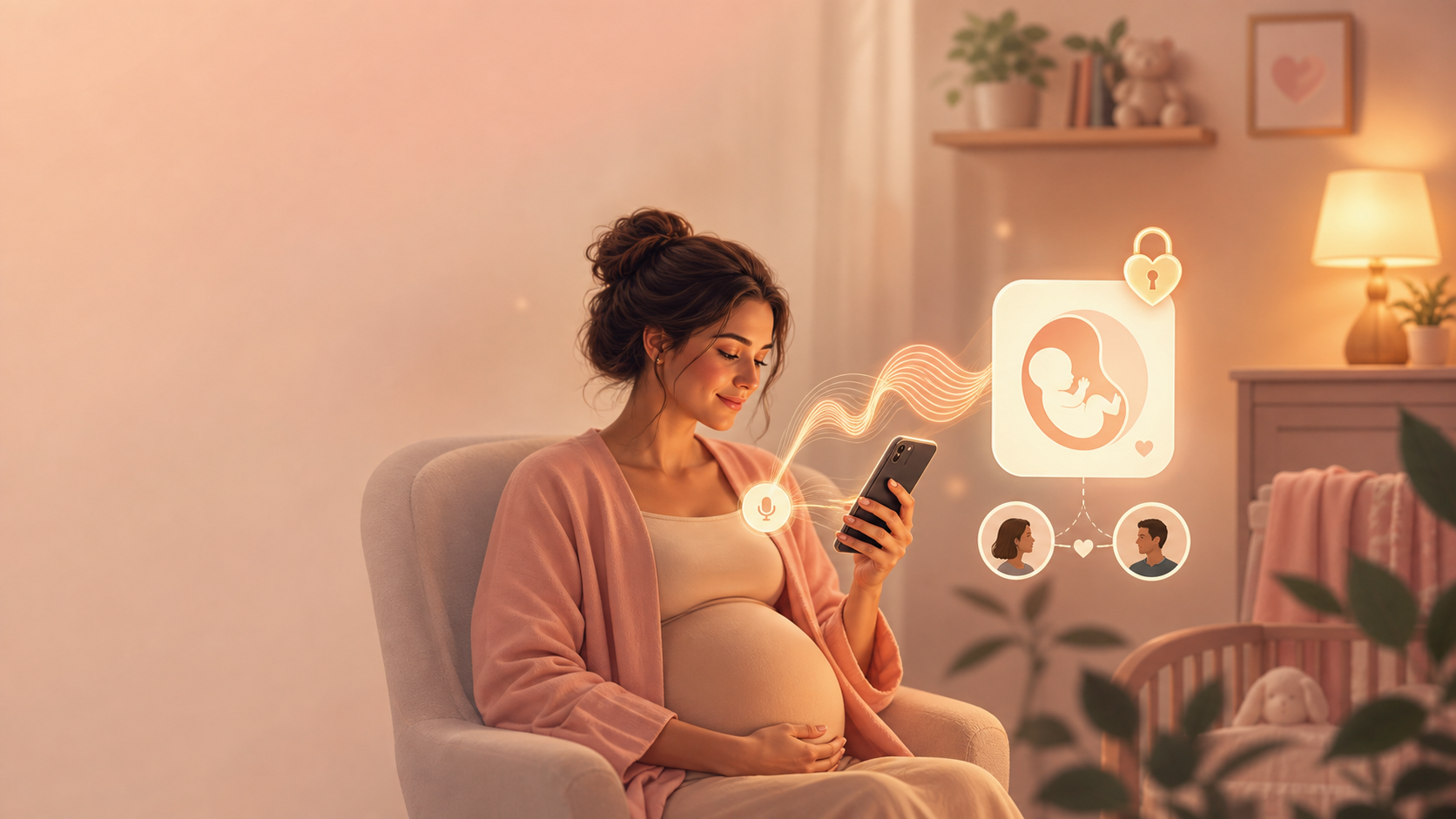
The concept we are validating is deliberately narrow. A parent or close family member would give clear permission, record a short sample, and receive a private story or blessing sample. Families should be able to understand what is collected, how it is used, and how to request deletion.
We do not support cloning someone else's voice, public voice marketplaces, voice use without consent, or pages that collect private care details about pregnancy, birth, or the baby.
Sources and limits
This guide uses parent-facing pediatric guidance and research signals to shape a validation page. It is not medical advice. Studies about hearing, voice preference, or prenatal familiarity do not prove that a commercial audio product changes health, sleep, intelligence, attachment, or development.
See the consent-first product flow
The product demo shows how a voice owner confirms a sample, authorizes a specific person, chooses finished audio or DIY story permissions, and can revoke access later.
View product demo