The simplest rule: keep it calm and optional
Prenatal audio does not need to be loud, frequent, or optimized. If a family wants to talk, read, sing, or play a short story, the experience should be comfortable for the pregnant parent and easy to stop at any time.
We frame voice stories as companionship and a keepsake. We do not present them as a way to change health, sleep, intelligence, language, attachment, or development.
Volume and placement boundaries
- Use a gentle, comfortable volume: if an adult needs to raise their voice over it, turn it down.
- Do not press headphones, speakers, or vibrating devices directly against the belly.
- Avoid long sessions. A short hello or story is enough for an early family ritual.
- Move away from loud sound sources, deep rumbles, or strong vibration when possible.
- Follow qualified professional guidance for pregnancy and infant care.
What official noise guidance suggests
CDC/NIOSH guidance on workplace noise and pregnancy says sound from outside the body is reduced in the womb but not fully blocked. It advises pregnant workers to avoid very loud areas, including environments above 115 dBA, and to keep distance from sources of noise or vibration.
The American Academy of Pediatrics also frames loud environments as something families should avoid for children, using a practical warning sign: if a place sounds too loud for an adult, it is likely too loud for a child. For our product, that means the safe default should be quiet-room voice, not loud speaker playback.
Privacy and consent boundaries
A voice can be personal. Do not clone or upload someone else's voice as a surprise. Do not use a grandparent, partner, sibling, or friend recording unless that person clearly understands the use and agrees.
Families should avoid recording sensitive care details, exact schedules, addresses, family conflict, or anything they would not want stored. A good prenatal story is warm and simple enough to keep private, share carefully, or delete.
Product claims we intentionally avoid
Prenatal Voice Companion should not claim to improve fetal health, make a baby sleep, make a child smarter, promise an emotional outcome, or replace professional advice.
The honest promise is narrower: families may want a private way to preserve a familiar voice moment. The validation question is whether that feels meaningful enough for parents to join the waitlist or try a sample.
A simple checklist before recording
- Is the voice owner clearly consenting?
- Is the room quiet enough that the recording can be soft?
- Is the message free of private care details?
- Would the family be comfortable hearing this later?
- Can the family request deletion if they change their mind?
How this shapes the MVP
Safety boundaries affect the product as much as the voice model does. A realistic sample is not enough if the recording flow creates pressure, collects too much private information, or makes families unsure about deletion.
For the MVP, this means short samples, clear consent, deletion support, no public voice marketplace, and no medical or developmental outcome promises. The experience should feel like a careful family keepsake.
Sources and limits
This guide adapts public noise and pediatric guidance into product boundaries. It is not medical advice. Families with pregnancy or infant-care concerns should follow qualified professional guidance.
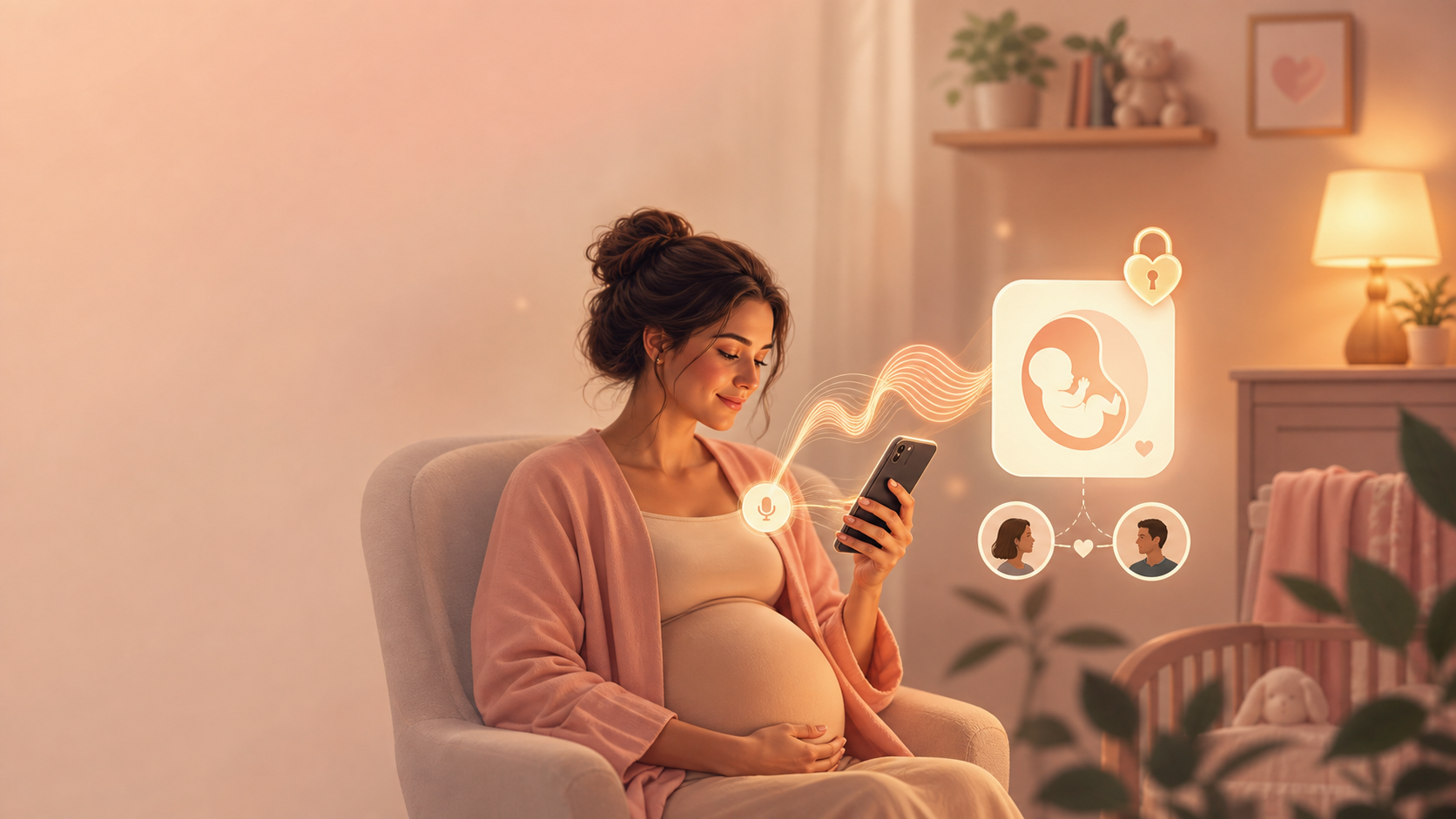
See the consent-first product flow
The product demo shows how a voice owner confirms a sample, authorizes a specific person, chooses finished audio or DIY story permissions, and can revoke access later.
View product demo