Start with one feeling, not a perfect script
Parents often freeze because they try to record the perfect message. A warmer goal is easier: choose one feeling you want the baby to hear. It might be calm, welcome, protection, delight, gratitude, or a small hello from a dad, partner, or grandparent.
A good prenatal voice message should sound like a real person speaking gently. It should not claim that audio will improve sleep, health, intelligence, language, or development. The promise is companionship.
Five message ideas you can adapt
- A bedtime hello: say good night, name one thing you loved about today, and end with a quiet promise.
- A dad or partner note: introduce your voice and say what you are looking forward to doing together.
- A family blessing: invite a close relative to share one hope, only with clear permission.
- A tiny story: describe a walk, a meal, a song, or a family place the child may hear about later.
- A future letter: speak as if the child may listen again years from now.
A simple 60-second structure
Use this structure if you want a starting point. Speak slowly, leave small pauses, and avoid whispering directly into the microphone.
- 10 seconds: say who you are and that this message is made with love.
- 20 seconds: tell one tiny true detail from your family life.
- 20 seconds: say what you hope the child feels when hearing your voice.
- 10 seconds: close with a repeatable phrase, such as good night or we are here.
How to make it sound more like you
Do not read too fast. Smile a little if the message is joyful. Sit comfortably if the message is calm. If your natural voice is quiet, that is okay. A real voice with small imperfections usually feels warmer than a polished announcement.
If you plan to use an AI voice sample later, record without music, heavy noise reduction, or public background audio. The cleaner the source, the easier it is to preserve warmth without artifacts.
Consent and privacy boundaries
Only record a voice owner who clearly agrees. Do not clone or imitate another person's voice without permission. Avoid exact addresses, medical details, due dates, private schedules, or anything the family would not want stored with a voice sample.
For this validation, the safe product question is narrow: would families want a private, consent-first parent voice story enough to join the waitlist or test one sample?
Sources and limits
Parent-facing guidance from HealthyChildren.org notes that babies may hear some outside sounds later in pregnancy, including a parent's voice. Pregnancy Birth and Baby and ZERO TO THREE also frame talking, singing, and reading before birth as ways families can begin connecting. This page turns that into message ideas, not medical advice.
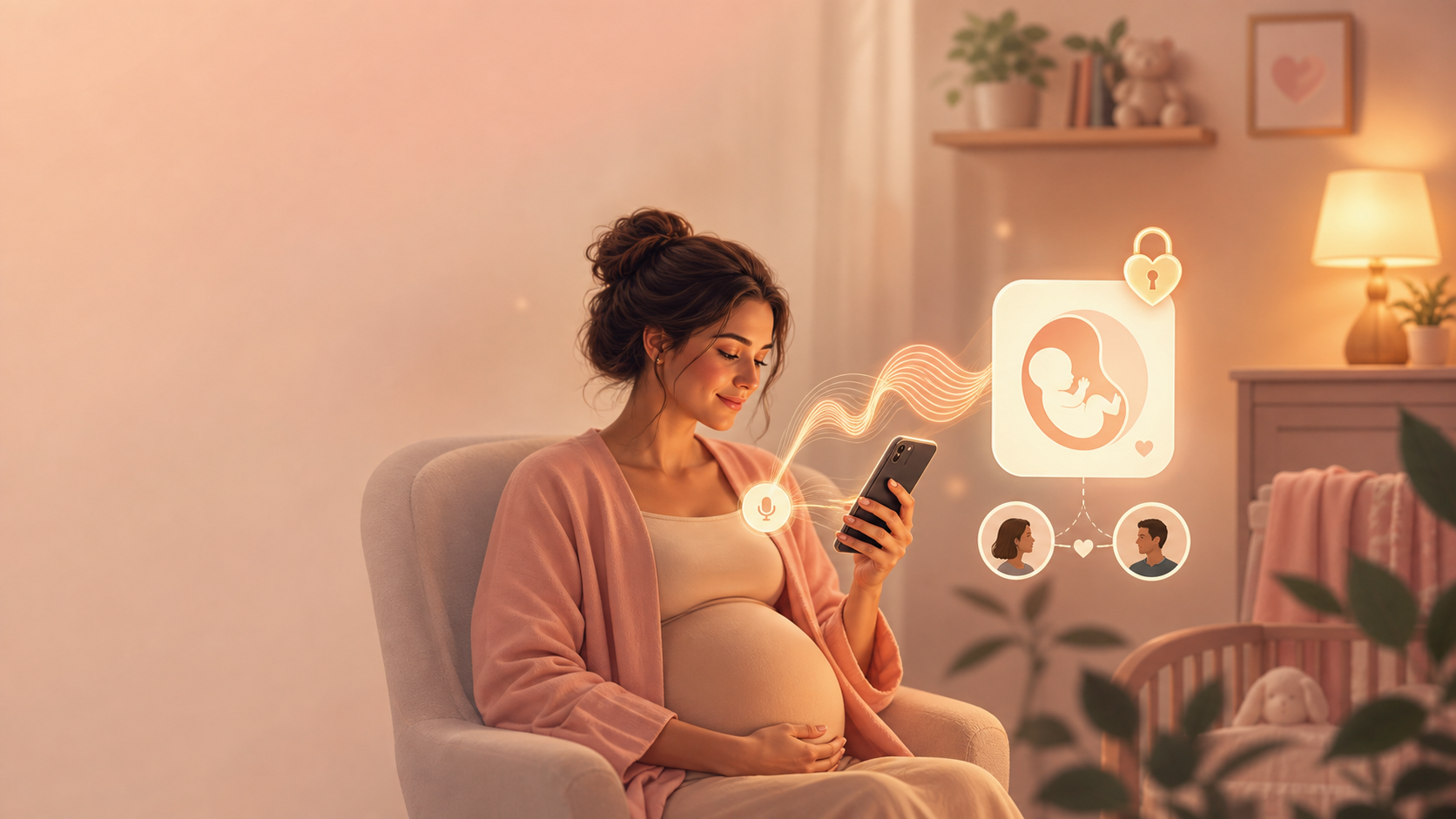
See the consent-first product flow
The product demo shows how a voice owner confirms a sample, authorizes a specific person, chooses finished audio or DIY story permissions, and can revoke access later.
View product demo