Why this topic matters for overseas validation
Many families are spread across countries, time zones, and languages. The expecting parent may want the baby to grow up hearing a grandparent's accent, nickname, blessing, or family story, but video calls and holiday visits are not always easy.
Public family-health resources often encourage gentle bonding through talking, singing, reading, and family support during pregnancy. We use that as a reason to test emotional companionship, not as a claim that a product changes health or development.
What a grandparent can record
Keep it short and personal. A good first recording can be 45 to 90 seconds: a hello, a family nickname, one memory from the parent's childhood, and one wish for the baby. The recording should sound like a normal loving conversation, not a formal speech.
If the family later wants an AI voice sample, the grandparent should understand that their voice may be used to create a private test audio file. Do not treat consent as a one-time checkbox. Make the purpose, storage, and deletion path easy to understand.
Five gentle message ideas
- A first hello: "I am waiting to meet you, and our family is already making room for you."
- A tiny family story: one warm memory about the baby's parent as a child.
- A family place: describe a kitchen, garden, street, or festival the child may visit someday.
- A blessing in the family's home language, with a simple explanation for the parent to keep.
- A future promise: one story, meal, walk, or tradition the grandparent hopes to share.
A simple recording flow for older family members
Start with the easiest device they already use. A phone voice memo is enough for the first validation round. Ask them to sit in a quiet room, keep the phone about a hand away from the mouth, and record without background music or TV noise.
The file does not need to be perfect. For a keepsake, warmth matters more than studio quality. For voice-clone testing, clean speech matters too, so one calm retake is usually better than trying to fix a noisy file later.
Consent and privacy boundaries
Do not clone a grandparent's voice as a surprise gift. Do not upload a relative's recording unless they know what is being tested. Do not include medical details, exact addresses, travel dates, legal names of children, or private family conflict.
Keep listening volume gentle and follow qualified pregnancy and infant-care guidance. This guide is about family connection. It is not medical advice and does not promise better sleep, intelligence, attachment, hearing, or development.
How this helps the MVP decision
This page tests a concrete question: do families want more than the parent's own voice? If overseas visitors care about grandparent messages, the MVP may need a family permission flow, multi-speaker review, and clearer deletion controls from the start.
If visitors ignore this topic, we should keep the first MVP narrower: one authorized parent voice, one private story sample, and one simple waitlist follow-up.
Sources and limits
These resources support the idea that talking, singing, reading, and family support can be part of bonding during pregnancy. They should not be turned into claims that a voice product produces medical or developmental outcomes.
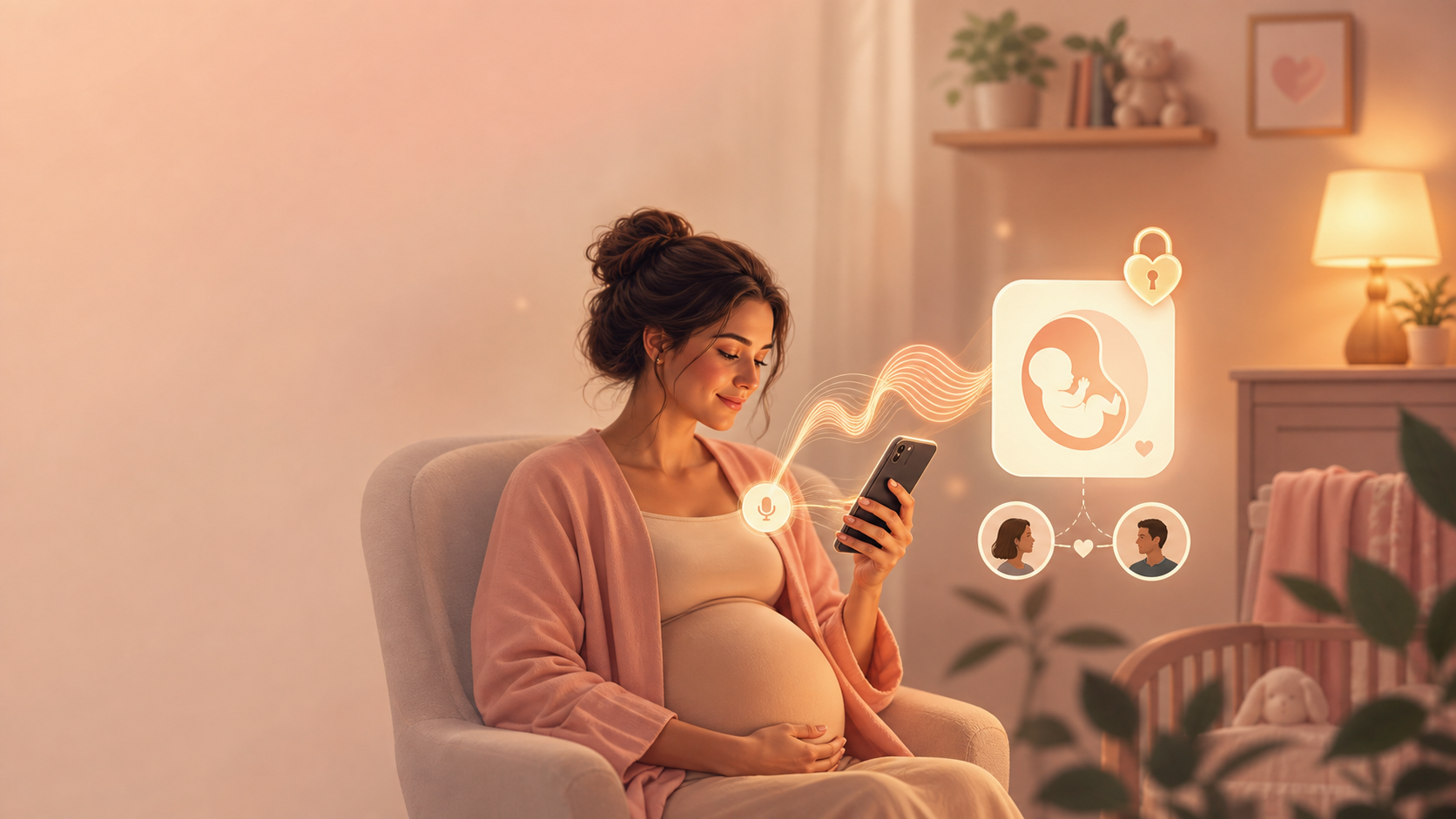
See the consent-first product flow
The product demo shows how a voice owner confirms a sample, authorizes a specific person, chooses finished audio or DIY story permissions, and can revoke access later.
View product demo