A prenatal story does not need to be perfect
Public family-health resources often encourage talking, reading, or singing to the baby during pregnancy as a way to connect. HealthyChildren.org notes that babies may hear some outside sounds later in pregnancy, and familiar voices, books, or songs can become comforting after birth.
That does not mean the story must be educational, polished, or long. The safer product lesson is simple: a familiar voice can make a keepsake feel personal. It should not be framed as a way to guarantee health, sleep, intelligence, attachment, or development.
Twelve short story prompts to record
- The first hello: say who you are and one thing you already love about the baby.
- The day we learned about you: keep it gentle and skip private medical details.
- A room in our home: describe a chair, window, song, or blanket waiting for the baby.
- A family recipe: tell the story of a meal the family hopes to share one day.
- A walk we will take: describe a park, street, beach, or morning route.
- A tiny family joke: choose something kind that will still feel sweet later.
- A sibling's message: let an older child say hello, sing, or ask one simple question.
- A grandparent blessing: record only if the grandparent clearly agrees to voice use.
- A name story: share why a name, nickname, or family word feels meaningful.
- A bedtime page: read one short page from a family favorite.
- A calm promise: say one steady sentence about being there for the child.
- A future birthday note: speak as if the child might hear it again years later.
How to keep a recording warm and usable
Keep each recording short: 45 to 90 seconds is enough for an early sample. Choose a quiet room, use a comfortable speaking voice, and leave a small pause at the beginning and end. Do not add loud background music, heavy effects, or private family details.
If the recording is meant for a voice sample, the voice owner should speak directly and give clear consent. A parent should decide what family voices are invited, what is stored, and when anything should be deleted.
Grandparents can be included without pressure
A grandparent's voice can feel deeply personal, especially when families live far apart. Still, the invitation should be gentle. Not every relative wants to record, and not every family wants extended voices in a private pregnancy ritual.
The boundary is straightforward: ask first, explain the use, keep the sample private, and make deletion possible. A surprise voice clone is not a gift; it is a consent problem.
How we use these prompts in validation
Prenatal Voice Companion is using prompts like these to test whether families want one private, consent-first parent voice sample before any full product is built. The best prompt is not the cleverest. It is the one a real family would actually want to keep.
In the MVP, prompts also help us compare voice technology. A sample is only useful if it sounds familiar, emotionally warm, easy to understand, and safe enough that a parent would genuinely consider playing it at home.
Sources and limits
This guide adapts public family-health and early-childhood guidance into story prompts. It is not medical advice. It does not claim that prenatal recordings improve health, sleep, intelligence, language, attachment, or development.
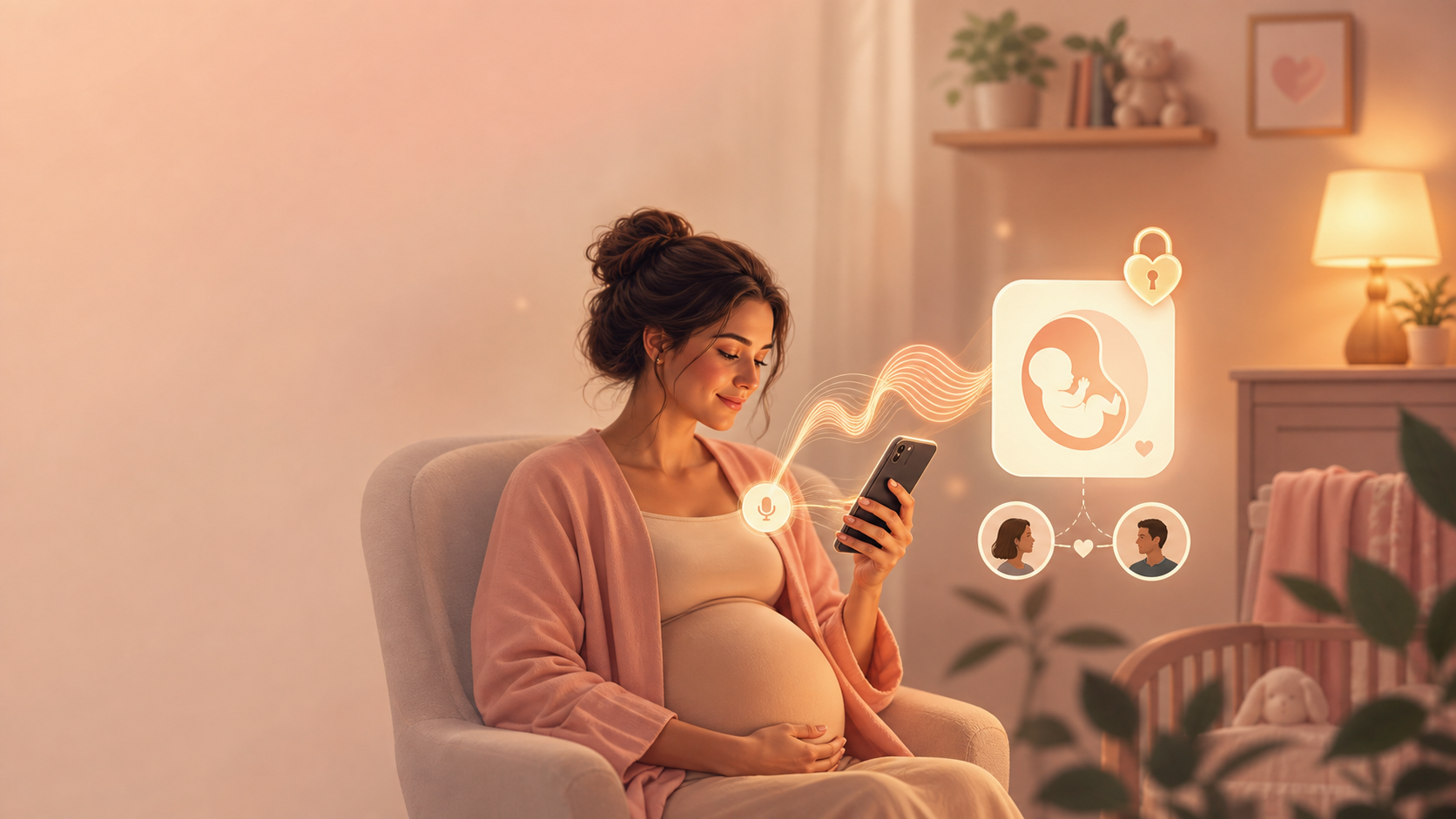
See the consent-first product flow
The product demo shows how a voice owner confirms a sample, authorizes a specific person, chooses finished audio or DIY story permissions, and can revoke access later.
View product demo