Why bilingual families are a useful validation signal
Overseas families often live between countries, grandparents, accents, and everyday languages. A parent may wonder whether a prenatal voice message should use the local country language, the family heritage language, or the private words they already use at home.
For this MVP, that question matters because it affects recording prompts, story templates, voice generation quality, and whether the product should detect a visitor's country and language from the first page.
Which language should you record?
Start with the language that carries the most warmth for the voice owner. A baby does not need a formal lesson. The family is testing whether a familiar parent voice can feel close, caring, and repeatable.
If two languages both feel important, make the message simple: one sentence in the home language, one sentence in the country language, and one repeated blessing that your family would still like to hear years later.
Four recording patterns to try
- Home-language first: record the whole blessing in the language your family uses around the dinner table.
- Two-line bridge: say the same short wish in two languages so both sides of the family feel included.
- Nickname plus story: use the baby's family nickname, then tell a tiny memory in the speaker's strongest language.
- Parent translation note: keep the audio natural, then write a short translation for the other parent or grandparent.
A short bilingual script
"Hi little one. This is Dad. I am speaking in the language I grew up with because I want you to hear where part of our family comes from. We are waiting for you with so much love. Good night, baby."
Replace "Dad" with mom, partner, grandma, grandpa, or the family title your child may use. Keep the tone gentle and conversational. The goal is not to sound like a teacher. The goal is to sound like someone already loving the baby.
Consent, privacy, and safe boundaries
Record only with clear permission from the voice owner. Do not upload a partner's, grandparent's, or relative's voice just because it would be a sweet surprise. Keep out medical details, exact addresses, travel dates, legal names of children, and private family conflict.
Keep listening volume gentle and follow qualified pregnancy and infant-care guidance. This guide is about family connection and product validation. It is not medical advice and does not promise better sleep, intelligence, hearing, language development, or attachment.
What this teaches the product team
If bilingual visitors join the waitlist or ask for sample audio, the MVP should keep language choice visible in the form, preserve the chosen language in analytics, and test whether voice models keep warmth across languages.
If they ignore this topic, the first product can stay narrower: one language, one authorized parent voice, one story sample, and a later expansion for multilingual families.
Sources and limits
These sources support gentle talking, singing, reading, and bonding during pregnancy. They should not be used as proof that a voice product creates medical, developmental, sleep, or language outcomes.
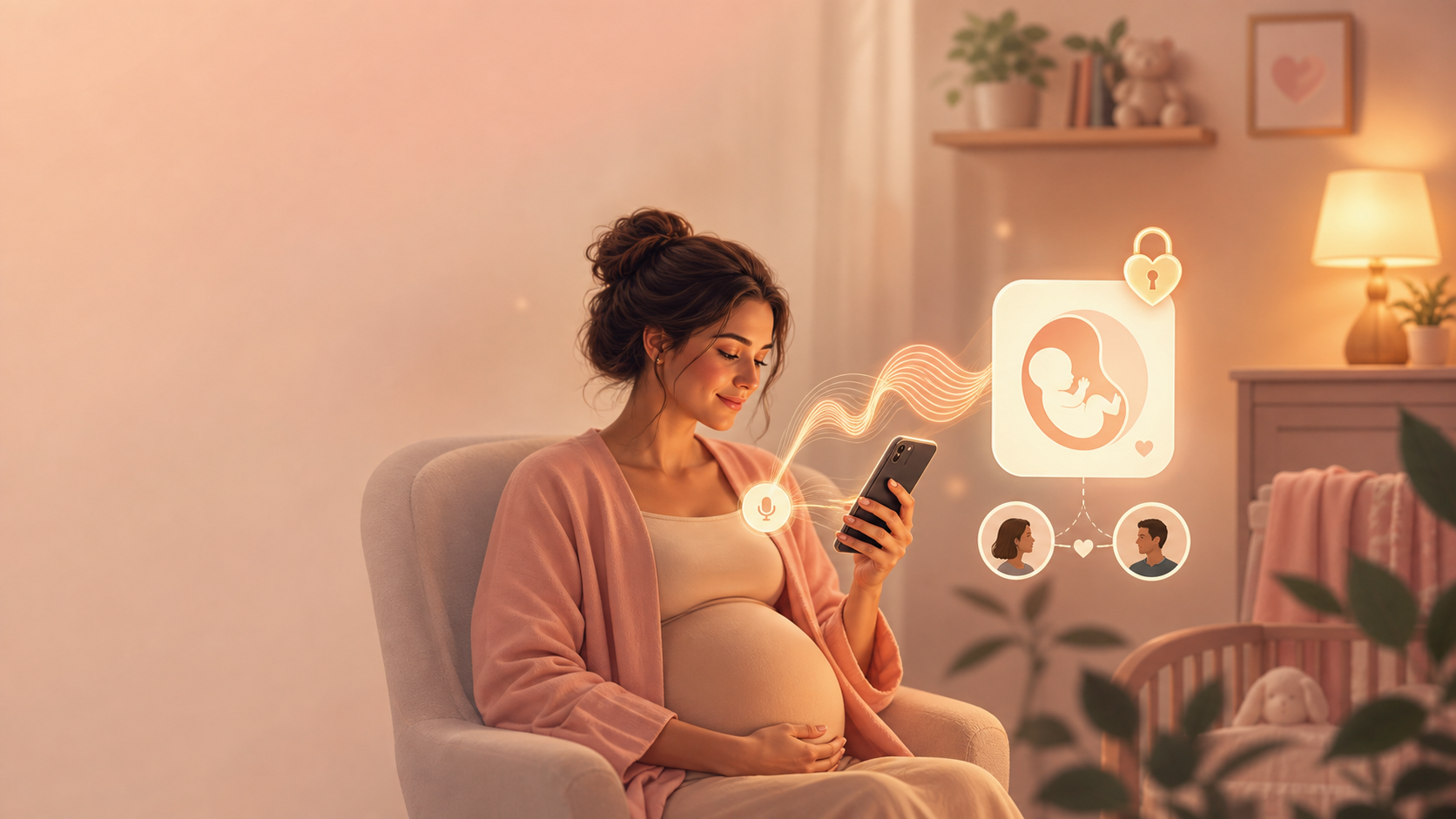
See the consent-first product flow
The product demo shows how a voice owner confirms a sample, authorizes a specific person, chooses finished audio or DIY story permissions, and can revoke access later.
View product demo