The short answer
Many families start whenever it feels emotionally natural. From a hearing-development perspective, parent-facing guidance often points to the late second trimester and third trimester as a meaningful time for reading, singing, and familiar voices.
The goal is not to create pressure. A short good morning, a bedtime hello, or the same little family phrase is enough. This is companionship, not homework.
A simple parent-friendly timeline
- Early pregnancy: talk if it comforts the parent. No recording routine is required.
- Around the middle of pregnancy: try a repeatable phrase, song, or short story if it feels natural.
- Late second trimester into third trimester: familiar voices may feel more meaningful as a family ritual.
- After birth: the same voice message can become a private keepsake, not just a prenatal activity.
What should parents actually say?
Speak the way you would speak to someone you already love. You do not need a perfect script, a special prenatal curriculum, or a long recording. The best first message is often ordinary and specific.
- "Good morning, little one. We are thinking about you today."
- "This is dad. I cannot wait to meet you."
- "Grandma is sending you a tiny blessing, with permission."
- "Here is the story our family likes before sleep."
How partners and family can join
The non-pregnant parent may appreciate a role that is simple and emotionally real: a weekly hello, a short story, or a phrase they hope the baby will hear again after birth. Grandparents can join too, but only with clear permission from the voice owner and the parents.
A good rule is to keep each recording short enough to repeat. If it feels like a performance, it may become harder to keep doing.
Boundaries before recording or using AI
If the family records a voice message, keep it private and low-risk. Do not include medical details, exact addresses, travel dates, legal names of children, private schedules, account information, or family conflict.
If AI voice generation is tested later, use only authorized voices and explain the deletion path. Do not surprise-clone a partner, grandparent, relative, or child.
Sources and limits
These sources support talking, singing, and reading as common bonding activities before birth. They do not prove that a parent voice product improves pregnancy, birth, infant sleep, intelligence, hearing, language, health, or development.
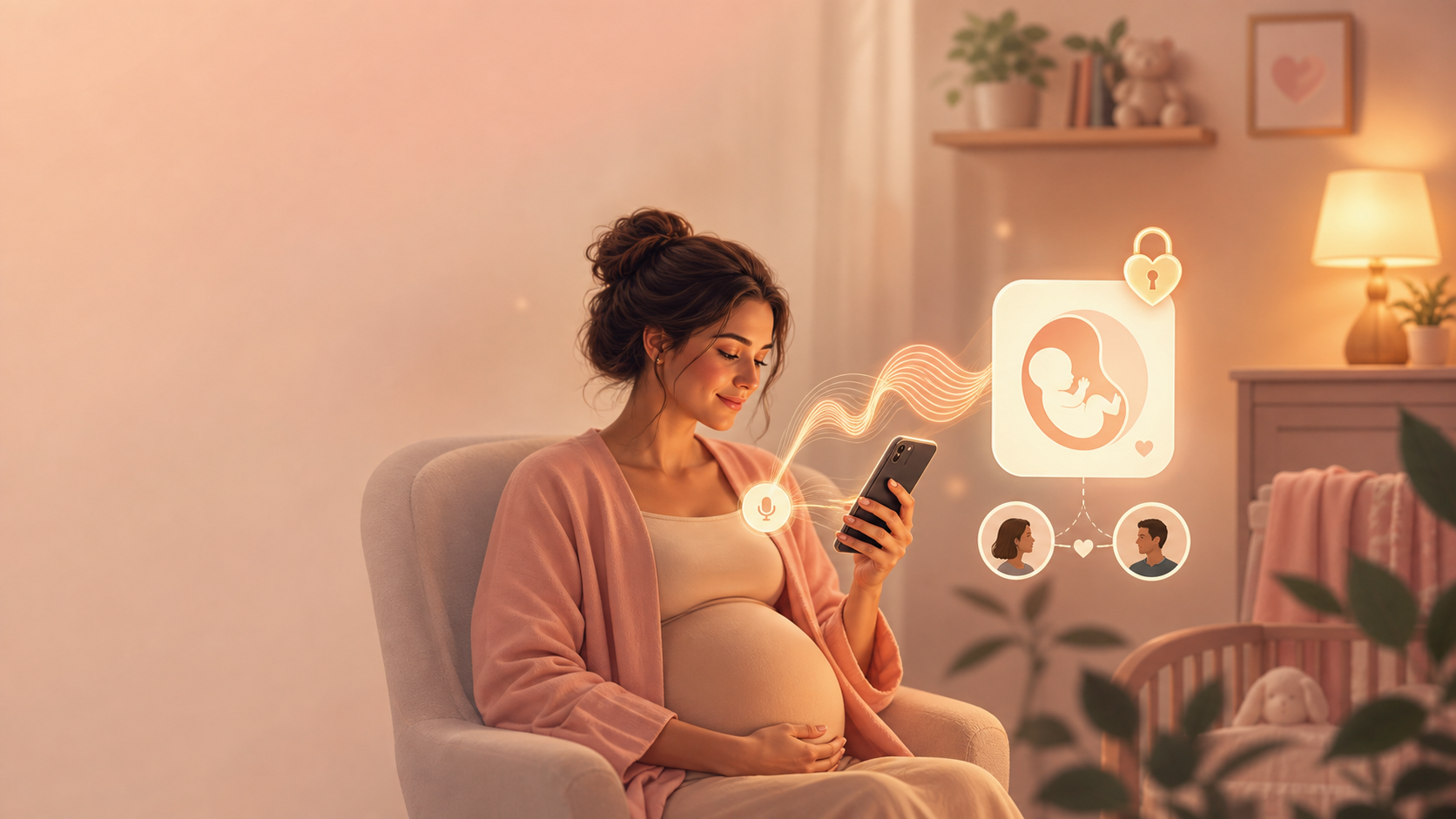
See the consent-first product flow
The product demo shows how a voice owner confirms a sample, authorizes a specific person, chooses finished audio or DIY story permissions, and can revoke access later.
View product demo